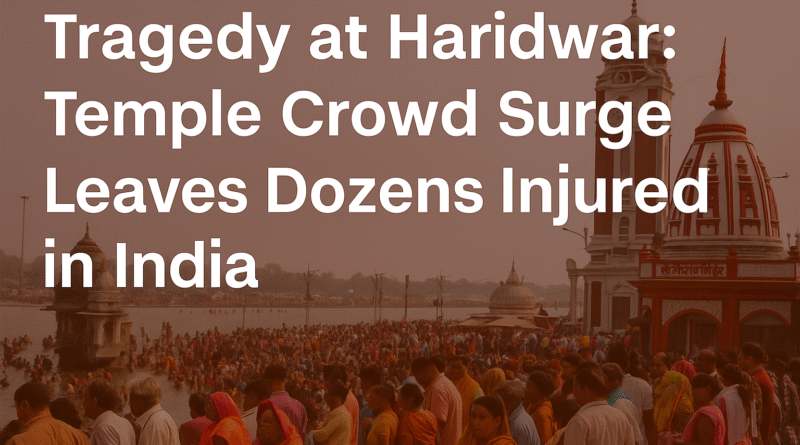
Tragedy at Haridwar: Temple Crowd Surge Leaves Dozens Injured in India
Introduction
A serene pilgrimage trip turned tragic at one of India’s most revered Hindu temples in Haridwar. A sudden wave of people rushing the temple premises triggered a deadly crush—killing at least six devotees and injuring dozens more. This incident underscores deeper issues around crowd control and temple site management.
What Happened at the Temple
On a hot weekend morning, worshippers gathered at the sacred ghats and temple corridors. Reports suggest that a smaller ritual group caused a bottleneck. In seconds, an uncontrolled push cascaded into chaos.
People were trapped between railings, several were trampled, and panic rippled across the crowd. Rescue teams arrived swiftly, but not before multiple lives were lost and numerous others injured.
Immediate Aftermath & Local Response
Locals frantically pulled people out from the crush, some even removing shoes and jewelry to free them. Hospitals nearby report dozens walking in with injuries ranging from fractures to burns from decorative oil lamps.
Officials issued a temporary alert, halting further rituals until crowd density eased. Temple authorities pledged to assist families of victims and improve entry and exit protocols.
Why It Matters
Large religious gatherings in India are a cultural norm—but they carry risk if unmanaged. This incident reminds us of past tragedies, such as stampedes during festivals or pilgrimages, where unregulated crowd flow proved disastrous.
With pilgrimage tourism booming, the Haridwar tragedy could prompt renewed scrutiny over safety protocols at sacred sites across India.
Voices from the Ground
A nervous survivor, eyes tearful, described falling into an unending sea of people—unable to move, unable to breathe. Another helper recalled pulling a man out just before he collapsed, urging others to stay vigilant.
Many families voiced anger: why wasn’t entry capped? Why no clear barriers? Their grief mingles with a demand for accountability.
Looking Ahead
Expect investigations. Local officials may hold permit-holders responsible for overcrowding. Safety audits at major pilgrimage sites are likely next—real-time crowd monitoring, better signage, and restricted access during peak hours.
Some devotees are calling for digital ticketing even at religious events—ensuring flow control, entry limits, and clearer oversight.
How Visitors Can Stay Safe
- Avoid visiting during peak festival hours if you’re not part of organized groups.
- Follow staff directions and designated pathways—even if lines look longer.
- Keep personal space—don’t try to push ahead or fit through narrow gates.
- If panic starts, crouch low and try to move with the group instead of against it.
Conclusion
The Haridwar temple tragedy is a sorrowful wake-up call. Ritual and reverence should never come at the cost of lives lost in the crush of the faithful. As investigations proceed, hope remains that change—real, tangible, policy-driven change—emerges from grief.
May the affected families find peace. May devotees and organizers both learn from this so it never happens again.